
Introduction: Why Avishkaar Shark Tank India Season 5 Was Important
Education-focused startups have always had a strong presence on the show, but Avishkaar Shark Tank India Season 5 stood out for addressing a critical gap in Indian schooling — hands-on STEM education for children. While coding and robotics are frequently discussed buzzwords, Avishkaar positioned itself as a company that goes beyond theory and screens, focusing on experiential learning.
At a time when parents are increasingly investing in future-ready skills for their children, Avishkaar’s pitch resonated strongly with both viewers and sharks.
What Avishkaar Does (Simple Explanation)
Avishkaar is a STEM education company for kids that teaches robotics, coding, electronics, and problem-solving through hands-on learning. The company designs structured programs where children build real projects instead of just watching videos or memorising concepts.
In simple terms, Avishkaar helps kids learn science and technology by doing, not just studying.
The Story Behind Avishkaar
Avishkaar was founded with a clear belief: Indian students are capable of innovation, but the education system often limits them to rote learning. The founders noticed that while interest in coding and robotics was growing, access to quality practical education was still limited to select urban schools.
Key problems identified:
- STEM learning was mostly theoretical
- Robotics kits were expensive or poorly designed
- Teachers lacked specialised training
Avishkaar began by collaborating with schools to introduce robotics labs and activity-based learning modules. Early success came from strong student engagement and positive feedback from educators, which helped the company scale its programs across multiple cities before pitching on Shark Tank India Season 5.
Business Model of Avishkaar
The Avishkaar business model is primarily B2B and B2B2C, working closely with schools while indirectly serving students and parents.
Core Elements of the Model:
- School partnerships for STEM programs
- Robotics and coding curriculum
- Proprietary learning kits and projects
- Teacher training and support
This approach ensures predictable demand and long-term institutional relationships.
How Avishkaar Makes Money
To understand how Avishkaar makes money, it’s important to look at its education-driven revenue streams.
Revenue Streams:
- School program fees (per student or per batch)
- Sale or licensing of robotics kits
- Annual STEM labs and workshops
- Competitions and advanced courses
Pricing & Margins:
- Schools pay recurring fees annually
- Kits provide additional margin upside
- Curriculum-based offerings improve retention
The Avishkaar revenue model benefits from repeat engagement and academic-year-based renewals.
Latest Shark Tank India News on Avishkaar
After appearing on Shark Tank India Season 5, Avishkaar gained nationwide visibility.
Post-show developments include:
- Increased inbound interest from schools
- Higher awareness among parents
- Stronger credibility as a STEM education provider
Like many education startups, the real impact of Shark Tank was trust-building rather than instant monetisation.
What Happened on Shark Tank India Season 5
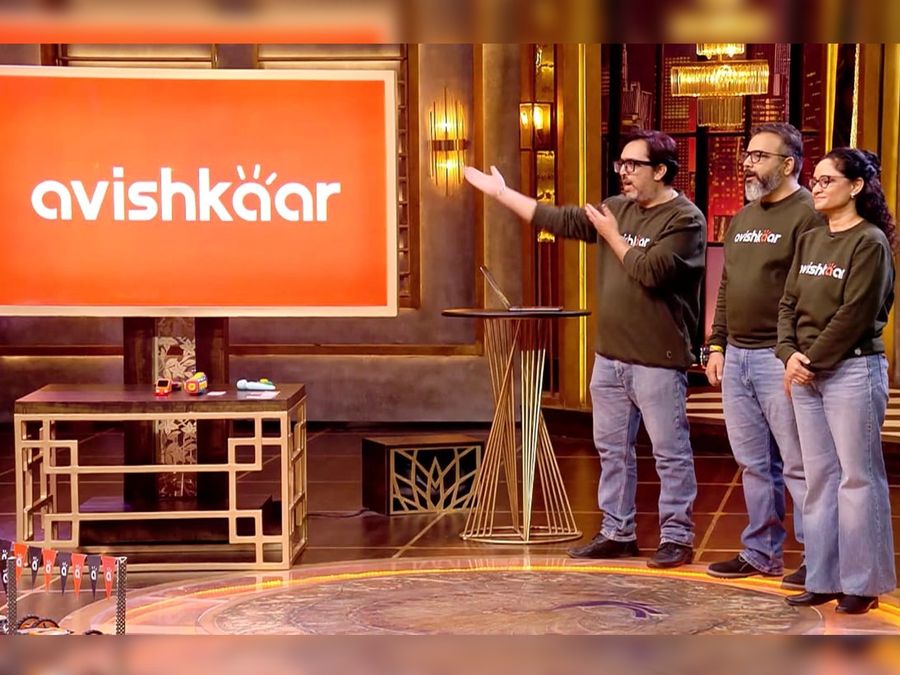
During the Avishkaar Shark Tank India Season 5 pitch, the founders presented:
- The need for experiential STEM education
- Their curriculum and learning outcomes
- Student engagement and expansion plans
The sharks focused heavily on scalability, differentiation from edtech apps, and long-term sustainability.
Sharks’ Reactions, Offers, and Final Outcome
The sharks appreciated Avishkaar’s:
- Strong alignment with India’s education reforms
- Hands-on learning approach
- Real-world impact on students
However, discussions also covered:
- Slow decision-making cycles in schools
- Operational complexity
- Revenue scalability
The Shark Tank India Season 5 Avishkaar deal discussions leaned more toward strategic feedback than aggressive investment.
Why the Sharks Invested / Did Not Invest
Positive factors:
- Massive long-term demand for STEM skills
- Strong institutional model
- Clear learning outcomes
Concerns:
- Lengthy sales cycles
- Execution across geographies
- Dependence on school adoption
The sharks emphasised process-driven growth and standardisation.
Market Opportunity and Competition
India’s STEM education market is expanding rapidly due to:
- NEP 2020 focus on experiential learning
- Rising awareness among parents
- Global demand for tech skills
Avishkaar competes with:
- Robotics and coding academies
- Online edtech platforms
- International STEM kit providers
Its edge lies in school-integrated, hands-on learning.
Growth Potential and Future Roadmap
Avishkaar’s growth opportunities include:
- Nationwide school penetration
- Hybrid online-offline learning models
- Advanced AI and robotics courses
- International curriculum partnerships
With disciplined execution, Avishkaar can become a leader in India’s STEM education ecosystem.
Risks and Challenges
Despite strong fundamentals, Avishkaar faces:
- Institutional sales delays
- Scaling instructor quality
- Curriculum standardisation
- Competition from low-cost edtech apps
Execution quality will determine long-term success.
Conclusion: Key Takeaways from Avishkaar Shark Tank India Season 5
The Avishkaar Shark Tank India Season 5 pitch highlighted the importance of teaching children how to think, not just what to learn. By focusing on robotics and coding through hands-on education, Avishkaar addressed a foundational gap in India’s learning ecosystem.
For founders, Avishkaar shows the power of solving systemic problems patiently. For investors, it reinforces that education startups offer long-term impact, not quick exits.
FAQs
What does Avishkaar do?
Avishkaar provides hands-on STEM education in robotics and coding for school students.
Who founded Avishkaar?
Avishkaar was founded by entrepreneurs focused on experiential STEM learning for children.
What is Avishkaar’s business model?
The Avishkaar business model is school-focused, combining curriculum, kits, and workshops.
How does Avishkaar make money?
Avishkaar earns through school fees, robotics kits, and annual STEM programs.
What deal did Avishkaar get on Shark Tank India Season 5?
Avishkaar pitched on Shark Tank India Season 5, where its model and scalability were evaluated.
Is Avishkaar profitable?
Profitability depends on scale and repeat school partnerships.
What is the latest news on Avishkaar after Shark Tank?
After Shark Tank India Season 5, Avishkaar gained increased national visibility and school interest.