
In 2021, the startup world was obsessed with “Growth at all costs.” Fast forward to February 2026, and the game has changed. Following the Union Budget 2026, which introduced massive tax holidays for “Micro-Unicorns,” the spotlight has shifted to lean, high-margin businesses.
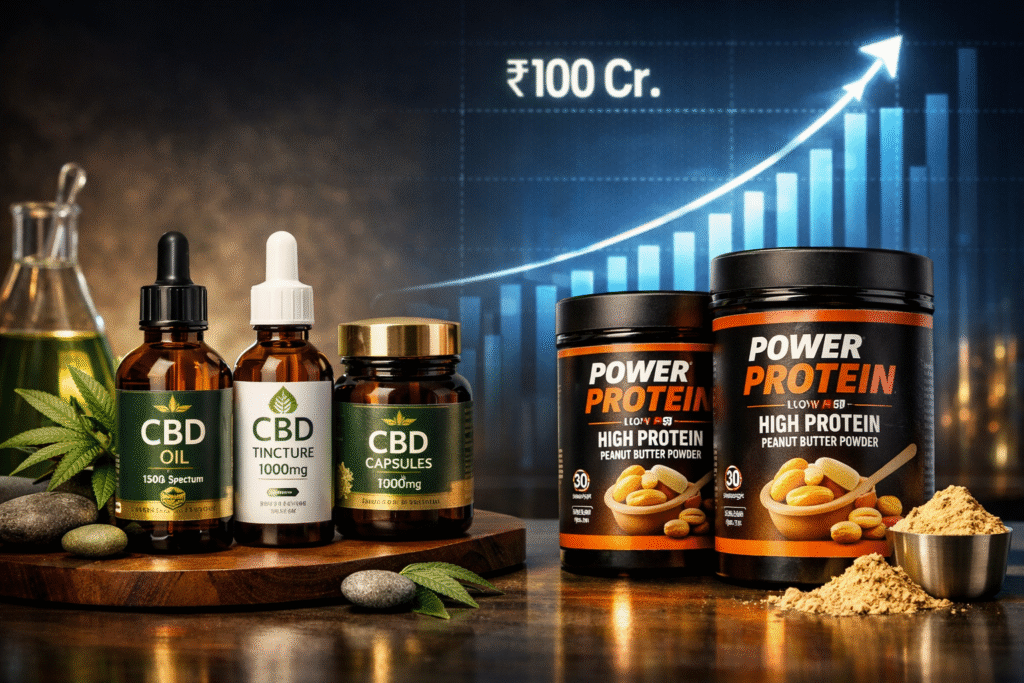
Two startups from Shark Tank India Season 5—Wholeleaf and MyPB—have become the “National Classroom” for this transition. While Wholeleaf scaled its annual run rate from ₹50 Lakh to ₹9 Crore in just 18 months, MyPB jumped from ₹5.5 Lakh to nearly ₹1 Crore in its first year. These aren’t just success stories; they are the strategic blueprints for building a ₹100 Crore empire with minimal capital.
The Problem: The “Burn-Rate” Trap of 2025
The ground reality in the last few years was a “funding winter” that killed thousands of startups. Founders were burning ₹10 for every ₹1 earned, trying to acquire customers in saturated Tier-1 markets. Against all odds, the industry realized that “vanity metrics” like app downloads didn’t pay the bills.
Startups faced:
- High CAC: Customer Acquisition Costs in metros became unsustainable.
- Supply Chain Brittle-ness: Over-reliance on imported raw materials.
- Lack of “Medical Defensibility”: Especially in wellness, where generic products failed to gain trust.
The Pivot/Strategy: The “Micro-Unicorn” Mastery
Both Wholeleaf and MyPB chose a different path: Hyper-Specialization and Unit Economic Discipline.
Wholeleaf’s Strategy (The Clinical Moat):
Founder Shivraj Sharma didn’t just sell “CBD oil.” He built a government-licensed medicinal brand backed by 13 clinical trials. By focusing on chronic pain management (arthritis and migraines), Wholeleaf achieved a 75% gross margin. They leveraged “Trust-based Distribution,” with 90% of offline sales coming through Apollo Pharmacy.
MyPB’s Strategy (The Niche Disruptor):
Pujan Kachhadiya identified a gap in the “Peanut Hub” of India (Gujarat). Instead of traditional peanut butter, he launched Peanut Butter Powder—a product with 85% less fat and 3x fewer calories. By traveling 30,000 km for R&D and conducting 200 trials, he built a product so superior that it became an Amazon Bestseller within 6 months of launch.
The Unit Economics: Micro-Unicorn Blueprint
| Metric | Wholeleaf (Cannabis Wellness) | MyPB (Functional Food) |
| Gross Margin | 75% | 65% |
| Top Sales Channel | 85% Website (Direct) | Amazon Bestseller |
| Annual Run Rate (ARR) | ₹9 Crore (Oct 2025) | ₹1.5 Crore+ (Proj.) |
| Repeat Purchase Rate | 18% | High (Subscription-led) |
| Capital Raised | ₹1.5 Crore (Shark Tank) | ₹70 Lakh (Shark Tank) |
The “ForgeUp” Analysis: Why This Model Wins in 2026
From a venture studio perspective, these brands are winning because they own their Intellectual Property (IP). Budget 2026 offers a “Design-Linked Incentive” (DLI) not just for chips, but for high-value food and wellness processing.
Wholeleaf and MyPB are “Default Profitable” setups. They don’t need a thousand employees; they need a robust supply chain and a high-trust digital storefront. This is the “Venture Studio” ideal: a lean team managing a high-margin, scalable product that solves a deep, recurring pain point.
Expert Consensus: What the Industry Says
“Wholeleaf is a textbook case of medical defensibility. They didn’t just market a product; they marketed clinical outcomes.” — Namita Thapar, Shark Tank India.
“MyPB proves that if you innovate at the source (Gujarat’s Peanut Hub), you can disrupt global giants with a fraction of the budget.” — Aman Gupta, Co-founder of boAt.
Founder’s Playbook: 3 Steps to ₹100 Crore
- Solve a “High-Value” Pain: Wholeleaf targets chronic pain; MyPB targets weight loss. Don’t sell a “nice-to-have”; sell a “must-have.”
- Own the Supply Chain: MyPB’s location in the Peanut Hub gave it a raw material advantage. Source locally to keep COGS at 25-30%.
- Clinical/Data Validation: In 2026, the consumer is skeptical. Use data, trials, and certifications to build an “Unshakeable Moat.”
The Bottom Line
The era of the “Micro-Unicorn” is the era of the Strategic Founder. By combining low overheads with high-margin products, brands like Wholeleaf and MyPB are proving that you don’t need a billion dollars to make a billion-rupee impact. In 2026, the real winners are those who build for compounding, not just clicks.