
New Delhi, January 27, 2026 — Indian textile and apparel companies saw strong gains in stock markets and export outlook on Tuesday after India and the European Union (EU) concluded a landmark Free Trade Agreement (FTA) that will eliminate tariffs on textile and labour-intensive goods exported to the EU, significantly improving market access for Indian producers. The deal, formally agreed after nearly two decades of negotiations, was hailed by Prime Minister Narendra Modi and EU leaders as a transformative pact that could reshape bilateral commerce.
What Happened and Why It Matters
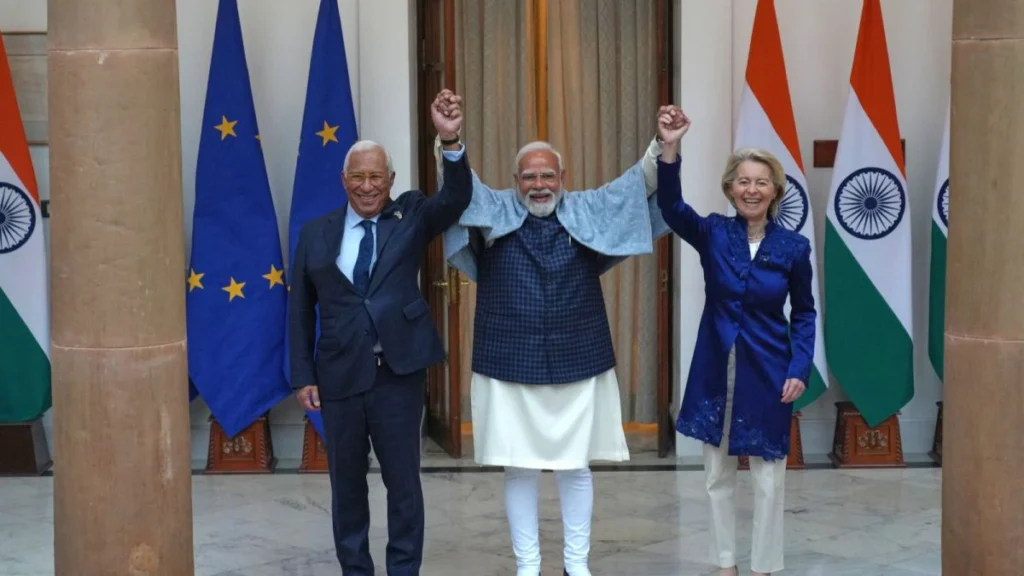
The India-EU FTA, described as the “mother of all trade deals”, was finalised on January 27 during the 16th India-EU Summit in New Delhi, with participation from European Commission President Ursula von der Leyen and European Council President António Costa alongside Prime Minister Modi. Under the agreement, the EU will phase out tariffs on about 96.8% of tariff lines, including those on Indian textile and apparel exports, moving many duties to zero over a defined period.
This development marks a significant shift for India’s textile sector, a labour-intensive industry that represents a major source of export revenue and employment. Analysts say zero tariffs will help Indian exporters compete more effectively against regional rivals like Bangladesh and Vietnam, which already enjoy preferential access under existing trade frameworks.
Market Reaction and Key Numbers
Domestic markets reacted positively to the news as stocks of export-oriented textile firms surged. Shares of companies such as Gokaldas Exports and other textile and labour-intensive sector companies rose by up to 12%, reflecting investor optimism over improved EU market access.
According to official and industry estimates, Indian exports of labour-intensive products to the EU were valued at approximately $35 billion in 2024, with tariffs on about $33.5 billion worth of these goods set to fall to zero upon implementation of the pact.
How the Deal Works: Zero Tariffs and Phased Cuts
Under the terms agreed by both sides:
- Textile, apparel, marine products, leather, and footwear will see tariffs move to zero either immediately or phased in over a structured timeline once the deal is implemented.
- The EU will eliminate duties on most Indian exports, providing tariff relief that Indian firms have long sought to level the playing field in competitive markets.
- Sensitive sectors such as automobiles and agriculture remain protected or subject to different schedules of tariff reduction negotiated separately.
Industry insiders say the tariff elimination will allow Indian textiles to regain competitiveness lost after the EU’s Generalised System of Preferences (GSP) benefits were suspended in early 2026 — a move that had increased import costs on Indian goods.
Official Statements and Strategic Significance
Prime Minister Modi described the agreement as not just a trade deal but a strategic partnership that “marks a new chapter in India-EU economic relations.” EU leaders echoed the sentiment, underlining the pact’s role in diversifying trade partnerships amid global economic shifts.
Trade officials highlight that the agreement, once fully ratified by EU institutions and Indian authorities, is expected to double bilateral trade over the next decade, bolster manufacturing, and create expanded opportunities for sectors beyond textiles, including gems and jewellery, leather products, and chemicals.
Sector Impact: Textile Exporters See Growth Potential
Textile exporters in key manufacturing hubs, such as Tiruppur and Ludhiana, welcomed the deal, citing expectations of higher shipments to European buyers in knitwear, outerwear and woven apparel segments.
Management teams at export houses like Gokaldas Exports have publicly stated that EU tariff relief will support higher revenue growth, with some projecting an increased share of EU-oriented sales within the next year.
What Happens Next
Although the political agreement has been signed, the FTA must undergo legal review and formal ratification by EU bodies and India’s cabinet before entering into force, a process expected to take several months. Once effective, tariff eliminations will roll out according to negotiated schedules.
In the meantime, firms and exporters are already strategising supply chain realignments, marketing pushes, and capacity expansions to capture anticipated demand from European buyers. Industry associations are also set to engage with regulators to address compliance, standards and non-tariff barriers to ensure smooth market entry.