
On February 12, 2026, the Indian banking sector is witnessing a shift led by the All India Bank Employees’ Association (AIBEA) and BEFI’s participation in a nationwide general strike. With major public sector lenders like SBI and Bank of Baroda filing precautionary alerts with the Bombay Stock Exchange (BSE), the day offers a masterclass in operational risk management and the friction between labor reforms and financial continuity.
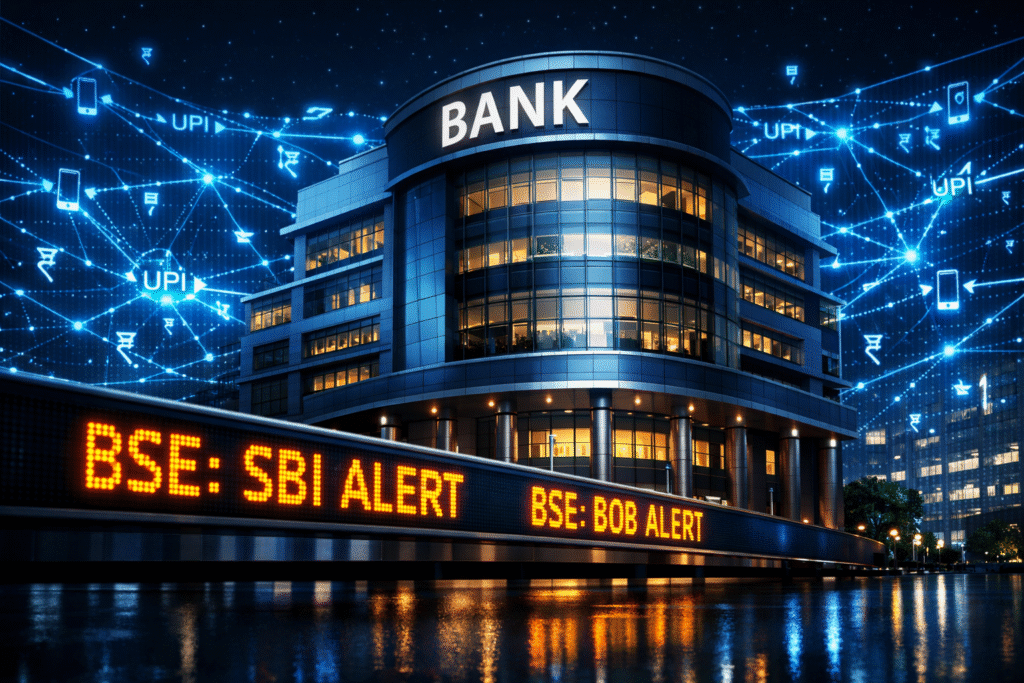
The Market Gap: Why a Strike Notice Becomes a BSE Filing
In the Indian market, a nationwide strike is not just a human resources issue; it is a material event for listed entities. The “Market Gap” here lies in the potential for a sudden freeze in physical liquidity and credit processing. Under SEBI Regulation 30, banks must disclose any event that could significantly impact their operations. By issuing BSE alerts, SBI and Bank of Baroda are fulfilling a transparency mandate, warning shareholders that while digital channels (UPI, IMPS) are robust, the “Last Mile” of branch-level banking—such as document verification for LC (Letters of Credit) or physical cash handling—could face a total standstill.
The Unit Economics: Normal Operations vs. Strike Disruptions
The following table highlights how a single day of industrial action recalibrates the efficiency of business banking:
| Metric | Normal Day Operations | Strike Day Impact (Feb 12) | Business Outcome |
| Cheque Clearing | T+1 Cycle (Standard) | Delayed (T+2 or T+3) | Working Capital Tightness |
| Cash Deposits | Real-time at Branch | Restricted / ATM Only | Reduced Retail Liquidity |
| Trade Finance (LC/BG) | Same-Day Processing | Highly Likely Disrupted | International Trade Delays |
| Digital Banking (UPI/App) | 99.9% Uptime | Unaffected | High Dependency on FinTech |
Also Read: Nifty IT Index Crash: Why Anthropic Shock and US Rate Fears Wiped Out ₹1.3 Lakh Crore
The “ForgeUp” Strategic Audit: Is the 5-Day Work Week Sustainable?
A core driver of this strike is the demand for a 5-day work week, a reform that the Indian Banks’ Association (IBA) has previously concurred with but which remains pending government approval.
- The Sustainability Verdict: Transitioning to a 5-day week is inevitable. With 30% of the workforce now being women and a rising mental health crisis due to work-related stress, a “rested banker” is essential for long-term accountability.
- The Regulatory Risk: The government is wary that a complete Saturday shutdown could alienate the Aam Aadmi in Tier-2 and Tier-3 markets who rely on weekend banking. However, as ForgeUp analysts note, with 2026’s digital penetration, the physical branch is becoming a “support hub” rather than a transaction center, making the 5-day week a viable trade-off for higher employee efficiency.
FAQ / People Also Ask
- Are banks officially closed today?No. The RBI has not declared February 12 as a holiday. Branches are technically open, but “Skeletal Staffing” may prevent many services from functioning.
- Why did SBI and Bank of Baroda issue alerts to the BSE?To comply with SEBI transparency norms. They must inform investors that staff participation in the strike could impact the bank’s operational performance and, consequently, its stock valuation.
- Will my UPI and ATM transactions work?Yes. Digital infrastructure and ATM networks are managed via centralized servers and third-party vendors, typically remaining unaffected by union strikes.
The Founder’s Playbook: Navigating Banking Friction
- Shift to Digital-First Liquidity: On strike days, avoid dependance on physical instruments like Demand Drafts. Use RTGS or NEFT, which are largely automated.
- Extended Credit Windows: If you have vendor payments due on Feb 12, communicate a 24-hour “strike buffer” to manage expectations and avoid “Cheque Bounced” penalties due to clearing delays.
- Monitor BSE Filings: For business owners with heavy exposure to specific PSUs, monitoring regulatory filings provides a 48-hour head-start on potential operational freezes.
The Bottom Line
- Limited Impact: Most disruptions are confined to branch-level activities; the core digital economy remains resilient.
- Policy Friction: The strike highlights the ongoing tension between the New Labour Codes and traditional worker protections.
- Proactive Transparency: BSE alerts are now a standard “Early Warning System” for businesses to recalibrate their daily cash-flow cycles.