
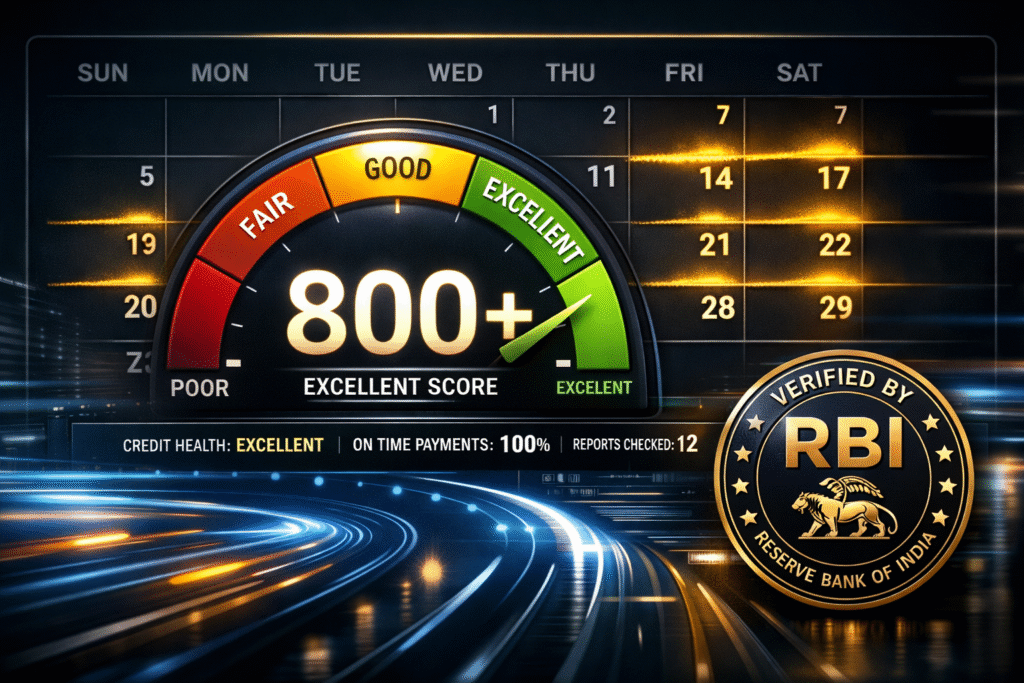
On February 14, 2026, the Indian credit ecosystem is witnessing a shift led by the Reserve Bank of India’s (RBI) mandate to compress the credit reporting cycle. With the transition from a 15-day cycle to a strict 7-day (weekly) update effective July 1, 2026, the strategy offers a masterclass in real-time risk assessment and borrower accountability.
The Market Gap: Eliminating the “Data Blackout” Period
Historically, India’s credit market suffered from “Information Asymmetry.” Borrowers who cleared their debts often had to wait 30 to 45 days for their CIBIL scores to reflect the improvement, causing them to miss out on lower interest rates for urgent loans. Conversely, “credit-hungry” borrowers could exploit this lag to apply for multiple loans across different banks before the first loan appeared on their record. The weekly mandate closes this gap, ensuring that a bank’s “Bureau Pull” is a reflection of your financial health from last week, not last month.
The Unit Economics: Fortnightly vs. Weekly Reporting
The move to weekly reporting significantly increases the operational load on banks but offers “Zero-Click Utility” for credit underwriting accuracy.
| Feature | Fortnightly Model (2025) | Weekly Mandate (July 2026) | Impact on Reader |
| Reporting Dates | 15th & Last Day of Month | 7th, 14th, 21st, 28th & Last Day | Real-time score accuracy |
| Data Reflection Lag | 14–20 Days | 3–7 Days | Faster access to better rates |
| Error Rectification | 30 Days | Standardized & Faster | Quicker fix for wrong entries |
| Loan Stacking Risk | High (2-week window) | Low (Weekly detection) | Prevents over-leveraging |
The “ForgeUp” Strategic Audit: Is Your Score Ready for the “Sprint”?
While a weekly update sounds purely technical, the ForgeUp audit highlights two critical shifts in how Indian founders and retail investors must manage their liquidity:
- The “Hard Pull” Trap: In 2026, if you apply for three credit cards in one week, every lender will see those inquiries by the following Tuesday. The days of “shopping around” for loans without immediate score impact are over.
- The “Correction Premium”: For the first time, borrowers who prepay their loans or settle disputes will see their “Prime” status restored in days. Analysts at HDFC and ICICI suggest this will lead to Dynamic Risk-Based Pricing, where your interest rate could literally change based on your most recent weekly behavior.
- Regulatory Pressure: The RBI has introduced a Data Quality Index (DQI). Banks with poor reporting discipline (lagging behind the 7-day rule) will be flagged on the DAKSH portal, ensuring that the burden of accuracy lies with the institution, not just the borrower.
Also Read: Kwality Wall’s Listing on Feb 16: Why 1:1 Demerger Ratio and ₹55 Target Triggered Market Buzz
FAQ / People Also Ask
- Will I get a free CIBIL report every week?No. The RBI mandate requires lenders to report data weekly. However, bureaus like CIBIL are only mandated to provide one free full report per year. Many fintech apps may offer weekly “score refreshes,” but these are often estimates rather than official full reports.
- Does a one-day delay in EMI affect my score immediately now?Yes. Since banks now report on fixed dates (7th, 14th, 21st, 28th), if your EMI was due on the 5th and you pay on the 8th, it will likely be captured as a “delay” in the 14th-day report.
- Will this help me get a loan faster?Absolutely. For “Super Prime” borrowers (Score 790+), the updated data allows lenders to issue Pre-approved offers with higher confidence, reducing the processing time for personal loans and CC upgrades.
The Founder’s Playbook: Strategic Credit Management
- Sync Your EMIs: Ensure your loan repayment dates fall at least 3-4 days before the 7th, 14th, 21st, or 28th of the month. This ensures your “Clean” status is reported in the very next weekly cycle.
- The 30% Utilization Rule: If you use your credit card for a large business purchase, pay it back before the next weekly reporting date to prevent a “High Utilization” flag from temporary denting your score.
- Audit Your CKYC: The new rules mandate using Central KYC (CKYC) numbers for reporting. Ensure your bank has your updated CKYC to avoid “Ghost Accounts” or mismatched data affecting your score.
The Bottom Line
- Hyper-Transparency: Your credit history is no longer a static document; it is a living, weekly logbook.
- Speed as a Reward: Discipline is rewarded with near-instant eligibility for lower-interest products.
- Discipline as a Shield: The weekly cycle makes it harder for fraudulent accounts or identity theft to go unnoticed for long periods.